- Crypto Intel
- Posts
- Ethereum's $100B Quantum Warning Meets Fresh Bitcoin ETF Inflows
Ethereum's $100B Quantum Warning Meets Fresh Bitcoin ETF Inflows
Security risks rise, institutions buy, and new rules reshape crypto's next phase.
Google just mapped out how $100B+ on Ethereum could be exposed to quantum attacks, Bitcoin ETFs quietly pulled in $1.32B after months of outflows, and Australia pushed crypto platforms under formal licensing.
This edition is about infrastructure risk, institutional positioning, and the regulatory frameworks that shape what you can safely hold long term.

Why It Matters (Sponsored)

Rising geopolitical tensions have pushed oil sharply higher — and renewed focus on energy equities.
For investors, the key question is which companies could thrive if prices remain elevated.
Zacks’ latest report reviews three oil stocks worth attention in this environment.
[Access the report]
*The results listed above are not (or may not be) representative of the performance of all selections made by Zacks Investment Research's newsletter editors and may represent the partial close of a position. Access grants you a comprehensive list of all open and closed trades.
*This free resource is being sent by Zacks.com. We look for investment resources and inform you of these resources, which you may choose to use in making your own investment decisions. Zacks is providing information on this resource to you subject to the Zacks "Terms of Service".
Market-Moving News
Three forces are reshaping your crypto playbook right now: a long-term quantum security challenge hanging over Ethereum, fresh institutional inflows into Bitcoin ETFs, and a major economy locking crypto under financial services law.
One story is about technological risk, one is about capital conviction, and one is about regulatory clarity.
In the short term, price still moves on momentum and headlines. Underneath that, security upgrades, ETF flows, and licensing regimes are quietly defining where serious money feels comfortable committing.
Ethereum
Google Warns Quantum Attacks Could Put $100B+ on Ethereum at Risk

A new 57-page paper from Google Quantum AI outlines five potential quantum attack paths targeting Ethereum, with combined exposure exceeding $100 billion at current prices. The focus online was mostly on Bitcoin, but Ethereum's architecture may actually face broader surface-level risk.
Unlike Bitcoin, Ethereum public keys become permanently visible once you send a transaction. Google estimates the top 1,000 wallets—holding roughly 20.5 million ETH—could be vulnerable if quantum machines crack keys at scale.
Admin Keys and Stablecoin Risk
The paper also flags at least 70 major smart contracts with exposed admin keys controlling roughly 2.5 million ETH. More importantly, those keys govern minting authority for stablecoins like USDT and USDC, meaning a single breach could ripple across DeFi lending markets.
Layer 2 networks such as Arbitrum and Optimism rely on cryptography that is not quantum-resistant, with at least 15 million ETH potentially exposed across L2s and bridges. Ethereum's proof-of-stake system, securing roughly 37 million ETH, could also be destabilized if validators are compromised.
One-Time Setup, Permanent Risk
The most concerning vector involves Ethereum's data availability system, which depends on a one-time setup ceremony. A quantum breakthrough could theoretically recover that secret and create a permanent exploit tool affecting all L2s using blob data.
The Ethereum Foundation is targeting quantum-resistant upgrades by 2029, but every smart contract and bridge would need to independently upgrade and rotate keys. No central switch can fix that overnight.
Take: You are not facing an immediate collapse, but you are looking at a long-term infrastructure challenge that cannot be ignored. If quantum timelines accelerate, capital will likely reward protocols that move fastest toward post-quantum security and punish complacency.
ETFs
Bitcoin ETFs Post First Monthly Inflows Since October

US-listed spot Bitcoin ETFs recorded $1.32 billion in net inflows in March, ending a four-month streak of outflows. This shift comes after Bitcoin fell as much as 50% from its October all-time high of $126,000.
November saw $3.5 billion in outflows, followed by $1.1 billion in December, $1.6 billion in January, and $206 million in February. March also delivered Bitcoin's first positive monthly candle in six months, hinting at stabilizing momentum.
Resilience Beneath the Surface
ETF holdings declined only about 7%, dropping from 1.38 million BTC in October to a low near 1.28 million before recovering toward 1.31 million. That resilience suggests large allocators did not fully abandon exposure during the drawdown.
Average ETF investor cost basis sits near $84,000, compared to spot prices around $68,000. Many holders remain underwater, yet inflows resumed anyway.
This tells you positioning is shifting from panic to patience. Institutions appear willing to add exposure before the price fully recovers.
Take: You are seeing early signs of capital stabilizing rather than capitulating, which often matters more than short-term price action. If inflows continue while Bitcoin trades below average cost basis, it strengthens the case that longer-term players are accumulating quietly.
Trivia: What was the approximate peak decline of the S&P 500 during the 2008 financial crisis? |
Industry Attention (Sponsored)

He revived EVs, revolutionized space, and built the biggest satellite network.
But this AI tech could go down in history as the crown jewel of Elon's career.
Nvidia CEO Jensen Huang says, "What Elon and his team has achieved is singular. It's never been done before."
Get the full story here.
Regulation
Australia Passes Digital Asset Bill Bringing Crypto Under Licensing
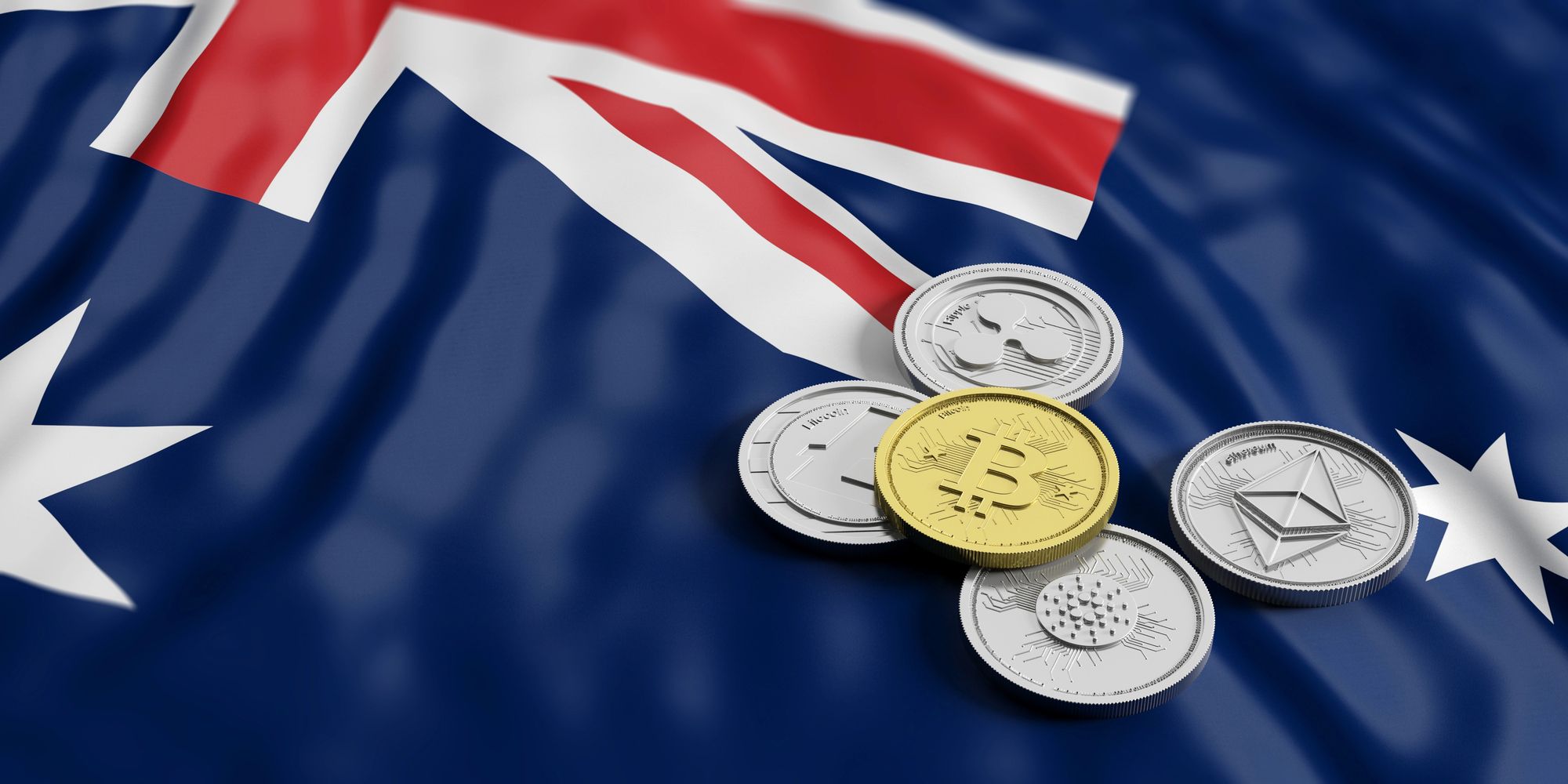
Australia has passed the Corporations Amendment (Digital Assets Framework) Bill 2025, bringing digital asset platforms under its financial services licensing regime. Exchanges and custody providers will now need an Australian Financial Services License from ASIC.
The bill amends the Corporations Act and ASIC Act to improve consumer protection, market integrity, and regulatory certainty. It now awaits royal assent and is set to take effect 12 months after approval, followed by a transition period.
Clarity Over Uncertainty
Industry group DECA welcomed the move, calling it a shift from regulatory uncertainty toward implementation. For the first time, digital asset platforms are directly addressed in national legislation.
An addendum clarifies that the law applies to platforms actually holding crypto for customers, not just technology providers using multi-party computation. That distinction matters for wallet infrastructure firms and shared-control custody models.
This framework signals that Australia wants structured oversight rather than blanket restriction. Licensing requirements raise compliance costs, but they also reduce gray-area risk.
Take: You are watching another major economy move crypto from experimental to regulated financial infrastructure. For investors, clearer rules often attract more institutional participation—even if short-term compliance burdens squeeze smaller operators.
Coin Leaderboard

Crypto Pulse
Quantum fears are hanging over Ethereum, institutions just sent $1.32B back into Bitcoin ETFs, and regulators in Australia are tightening the rulebook—yet parts of the market are still printing triple-digit gains. That tension tells you something important: long-term infrastructure debates are heating up, but short-term capital is still hunting momentum.
StakeStone ripped 190.85% on heavy whale activity, Nomina extended its breakout with another 139.68%, and Abelian jumped 48.48% as traders leaned into the quantum-resistant narrative. You are watching speculation sprint ahead even as the industry wrestles with security upgrades, institutional positioning, and regulatory resets.
Zoom out, and the contrast sharpens. Big money is thinking about custody, compliance, and post-quantum cryptography, while fast money is chasing velocity wherever liquidity spikes.
This is a market running on two timelines at once. If you can separate structural shifts from short-term hype, you give yourself an edge most traders never build.
StakeStone (STO) $0.3549 (+208.41%)
STO exploded 190.85% as large whale transfers picked up, signaling aggressive positioning behind the move.
Nomina (NOM) $0.006748 (+90.59%)
NOM extended its four-day breakout, adding another 139.68% as momentum traders continued to pile in.
Abelian (ABEL) $0.09067 (+28.7%)
ABEL climbed 48.48% in 24 hours as traders rotated into quantum-resistant narratives following Google's research update.
Forward Momentum (Sponsored)

After analyzing thousands of companies, our analysts pinpointed the 5 Stocks Set to Double based on accelerating performance, improving fundamentals, and strong technical signals.
This newly released report explains why these five could be positioned for major moves in the year ahead.
While results aren’t guaranteed, previous reports uncovered gains as high as +175%, +498%, and +673%.
Access the free report before midnight.
See the 5 Stocks Set to Double.
*Results may not represent all stock picks and may reflect partially closed positions. Investing involves risk, and past performance does not guarantee future results. This is not financial advice.
Future Forward
Crypto conferences are not just networking events—they are where the next cycle's buzzwords quietly get drafted. When founders, funds, and builders keep repeating the same themes on stage, you are getting a preview of where capital might rotate before Twitter catches up.
Airdrops are rarely random. They usually reward the people who actually use the product early, bridge funds, stake, vote, and stick around before the snapshot quietly locks in.
Token launches are public pressure tests. The first few days show you whether demand is real, liquidity holds up, and the community stays engaged when volatility hits.
Crypto Conferences:
💎 Pragma Cannes 2026 (Apr 2, 2026)
💎 Bay Area AI Founders and Talent 2026 (Apr 2, 2026)
💎 Dubai Startup Pitch and Mixer (Apr 2, 2026)
Upcoming Airdrops:
🎁 Tradoor (TRADOOR) Airdrop (Apr 15, 2026)
🎁 SoSoValue (SOSO) Airdrop (May 2026)
Upcoming Token Launches:
🚀 EarnPark (PARK) Token Sale (Apr 13, 2026)
🚀 EarnBIT (EBT) TGE and Distribution (Q2 2026)
Which event are you most excited for? Let us know!
Crypto Know-How: How Blockchains and Quantum Computing Collide
A blockchain is essentially a shared digital ledger secured by cryptography. Your wallet works because complex math makes it nearly impossible for someone else to guess your private key.
Right now, that math is safe because classical computers would need an unrealistic amount of time to crack it. Quantum computers, in theory, could solve certain cryptographic problems much faster than today's machines.
That doesn't mean your Bitcoin or Ethereum disappears tomorrow. The quantum machines capable of breaking major blockchains do not exist yet, but researchers believe they could arrive within the next decade.
The important part for you is this: blockchains can upgrade their cryptography, but it takes coordination and time. The projects that prepare early and migrate to quantum-resistant systems are likely to inspire more confidence than those that wait until the threat is urgent.
Everything Else
Quantum-resistant tokens like QRL and Cellframe surged up to 50% after Google suggested Bitcoin's elliptic-curve cryptography could theoretically be broken with fewer qubits than previously thought, even though such machines do not yet exist, showing how quickly you see long-term security fears priced into smaller caps.
US Federal Reserve Governor Michael Barr backed clearer stablecoin rules under the GENIUS Act but warned regulators must guard against run risks, weak reserves, and illicit finance, signaling that stablecoin growth may accelerate—just with tighter guardrails.
Hong Kong has yet to issue a single HKD stablecoin license despite a March target, with the HKMA saying approvals are still in progress, highlighting that even pro-crypto jurisdictions can move slower from policy headlines to real implementation.
European crypto asset manager CoinShares began trading on Nasdaq under ticker CSHR following a $1.2 billion SPAC merger, deepening crypto's ties to US public markets even as broader crypto-linked equities remain under pressure.
US prosecutors expanded a multi-year wash trading crackdown by extraditing three executives and charging 10 foreign nationals tied to alleged "market-manipulation-as-a-service," reinforcing that regulators are increasingly targeting fake volume and liquidity games across digital asset markets.
Instead of chasing every flashing green candle, zoom out and watch where serious builders are committing time and capital. The next breakout often starts long before price moves—it starts where attention, infrastructure, and incentives quietly line up.
Best Regards,
— Benjamin Vitaris
Crypto Intel